Every business is a people business. Thanks to a newly-empowered, more demanding customer, businesses must treat their customers as individuals if they are to compete.
Gee Ranasinha / February 29, 2012 / Customer Service
[Updated April 2026]
When asked, it’s no surprise that all but the most perverse businesses will tell you how deeply they care about their customers. It’s invariably the first thing we’d read on their website, or in their ads.
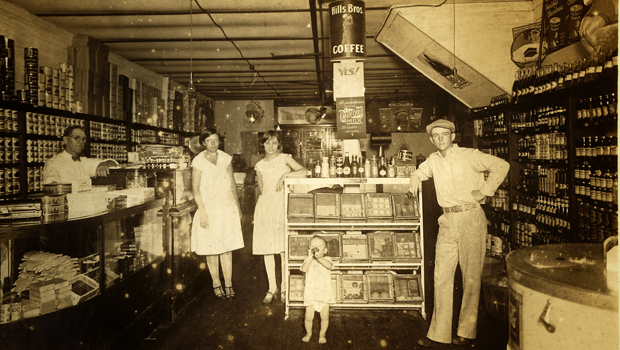
Commerce has always been a person-to-person (and later people-to-people) activity. Long before any of the infrastructure of modern sales or marketing existed, the merchant who remembered a regular customer’s harvest had been bad this year and quietly adjusted their payment terms accordingly, was doing something that today would need 27 sign-offs throughout an overcomplex management structure, and still probably wouldn’t get all the way there. The old way of customer relationship carried information that no CRM system would have been able to capture, because the information was contextual rather than behavioral.
Ford’s assembly-line logic, which kick-started mass manufacturing methods, wasn’t just confined to how factories made their products. The idea that identical processes, applied to identical inputs, would yield consistent and scalable outputs migrated almost completely into how mid-century businesses thought about their customers: as segments to be reached rather than people with situations. Mass marketing, when it arrived after the end of the Second World War, didn’t set out with a view to dismantle the customer relational model that had existed for all this time. Because of the new, previously unfathomable scale of manufacture, trying to give all of our customers the personalized individual attention they used to get was simply structurally impossible. We all got enamored with the scale of the new economic argument, that most businesses didn’t cotton on to what was being traded away until a long time later.
Why the model kept working long after it should have stopped
What held the mass-market model together for as long as it did was something called information asymmetry. For generations, the buyer/seller relationship was heavily skewed in favor of the seller. Sellers knew far more about the market than buyers did, and that gap kept the balance of power tilted to give a commercial advantage for anyone on the supply side of things. For customers to switch vendors, it would mean a ton of effort, time, and the cognitive overhead of starting a new commercial relationship from scratch. At the time (and still today) branding functioned as kind of cognitive shortcut, or heuristic, in markets and categories where potential buyers lacked sufficient background information to evaluate the utility of quality of a product or service directly.
Then the internet came along.
Within a few years the buyer/seller asymmetry that has been in place for centuries collapsed faster as a wet paper towel. Thanks to online channels, buyers can now compare options across an entire category in the time it would once have taken to drive (or write!) to a second supplier, with access to information that sellers used to control such as pricing data, third-party reviews, or competitive intelligence. The accumulated advantage of incumbency, familiarity, and the inertia of being the default choice eroded far faster than anyone with a large advertising budget in 1995 could have predicted.
The response, broadly, was to do what sellers had successfully done when confronted by such threats in the past: invest in tech.
Brands decided to invest heavily in technology, aiming to replicate the information advantage they used to have. This time, the tech was less about the market space and more about the customer – things like CRMs, data platforms, behavioral tracking, predictive analytics, personalization engines, and suchlike. The idea was that if we knew enough about our buyers, we could deliver the exact right message at the exact right moment in time, and hopefully recover some of what had been lost. A great idea in theory, but pretty much a car crash in practice. Even though we have all of this marketing technology, custom profiles, cookies, and tracking scripts, customer acquisition costs have risen by more than 200% over the past eight years. Try explaining that little tidbit away at the next board meeting.
Knowing about someone isn’t the same as understanding them
The data problem isn’t a data volume problem. None of us are short of getting hold of data – quite the opposite, in fact. The issue we have is more fundamental and, at the end of the day, more human: behavioral data tells us what happened, while the why is where most of the useful information lives.
Understanding someone, as distinct from having a data profile on them, requires inference. An experienced client account manager might notice that a customer is asking more questions than usual about contract flexibility, for example. Because of their experience, knowledge, and that 10% that we can only call “gut feeling”, they conclude that something in the customer’s budget cycle may have shifted. A person coming to such a deduction is unconsciously doing something that no clickstream data would surface on its own. Reading that behavior is contextual, nuanced, and something that humans are better placed to do that machines, which is presumably why businesses have chosen to divert around it rather than invest in it.
If you want to get nerdy about it, the neuroscience argument around this is pretty unambiguous. The experience of being genuinely recognized, understood as a specific person with specific circumstances rather than as a target segment with a propensity score, produces measurable changes in our brains’ neurochemistry. Oxytocin, the neuropeptide that brain boffins say is associated with trust and social bonding, is released from our brains when we experience authentic acknowledgment. In experiments, Oxytocin (sometimes referred to as “the love hormone”) has also been shown to have demonstrable effects on the formation of lasting preferences and resistance to competitive offers. Buyers who feel genuinely known by a supplier show significantly higher lifetime value than people who get that they consider competent but impersonal service, even when the impersonal option offers better pricing. Making the customer feel wanted and special results in them willing to pay a meaningful premium.
Unfortunately, most of what Martech calls personalization actually delivers is a just a hollow shell of what you or I would deem real recognition. Getting a piece of communication that has our name on it was novel and attention grabbing…in 1995 (maybe). Today, we all know how easy (and free of effort) it is to create such a piece, so we rate such messaging as basically on par with something anonymous. It’s not so much that, as customers, we’ve come to resent such automation. I think it’s just we don’t form the same attachment to such communication because we know it’s superficial and unauthentic and we’d much prefer the real thing.
Imagine a 200-person manufacturing organization receives a sequence of marketing emails from a supplier, each one “personalized” in the sense that it mentions their industry and company size. Reading the marketing content, it’s becomes clear that the implicit questions in the email sequence are not about the buyer’s situation or concerns at all, and are simply about the supplier’s capabilities. There’s nothing in the content that acknowledges that a 200-strong business may be dealing with a specific set of operational pressures that look totally different from what a 50-person shop faces. Yes, the marketing material is ‘personalized’ in that it mentions Mary, the plant manager. But it’s not individualized, where the content of the communication clearly demonstrates that someone on the other side has thought about those pressures specifically. That kind of marketing communication doesn’t really exist, does it?
The unit economics we’ve been getting wrong
Speak to most business owners or senior managers about this, and they’ll whine about how genuinely relationship-driven approaches don’t scale commercially at any meaningful size. McKinsey’s research on personalization puts revenue uplift from approaches that actually work at somewhere between 5-15%, with acquisition cost reductions of up to 50% in businesses executing well. Per-interaction costs of relationship investment suddenly look like a cheap deal when you consider acquiring a new customer costs somewhere between five and seven times more than keeping an existing one. Then factor in that customers retained through relationship quality rather than price and habit are less sensitive to competitive offers.
The bit that’s harder than buying software
The businesses that have actually cracked this, and I’m talking about businesses of meaningful size rather than boutique operations where the founder is personally involved in every account, went about it through organizational changes before doing anything technological. It’s about deciding how customer relationship quality can be a measurable metric, so that personnel from whatever department can quantify how what they’re doing applies to customer delight. Only once that’s done should we think about what kind of technology could be used to support our decisions. The reality is many businesses put the cart before the horse and blindly spent on tech to make the problem go away (and explain the CapEx away by mumbling something about “digital transformation”). Automation sequences get configured without anyone asking too carefully what they’re supposed to accomplish from the point of view of the customer. The result is some technically sophisticated tool set up to generate experiences that feel the same as the generic treatment buyers were getting before, except now it arrives with their name on it. What a win.
As usual, such outcomes are the result of businesses making decisions that look right from inside the function making them, without anyone holding the higher-level, 36,000ft view of what the cumulative experience feels like from the outside. We may think that buyers experience our business function by function, but in truth they experience the weight of every interaction as a sequence. Judgments are formed about whether dealing with us is worth what they perceive as friction, regardless of how clean any individual process looks on our internal dashboards.
Where this was always going
Commerce started out, way back when, as a relational activity. It then went through centuries organized around the opposite premise, for structural and economic reasons that made sense at the time. Today, we’re coming back to where we used to be, where we’re being expected to return to something that looks, at least in summary, to where we started. The evidence that buyer expectations are moving in this direction is consistent across research and categories. The harder question we need to ask ourselves is why, given that the direction seems reasonably clear, we continue to respond by upgrading tech, and sweeping the icky, touchy-feely stuff under the rug. Finance and economics people will say it’s because technology is purchasable on a predictable timeline with clear deliverables, while nurturing and cultivating relationships is built over years with hard-to-quantify milestones, no go-live date, and results that don’t show up in the next quarterly review.
The businesses in the stronger position in ten years will probably be the ones that have worked out how to use data to inform human judgment, and that have built organizations where the people closest to customers are also the people whose observations are heard by management and get taken seriously. Customers who feel genuinely understood don’t bother spending much time looking for alternatives. They know from experience what starting a new supplier relationship from zero actually costs, and such a calculation tends to land in our favor by a wider margin than a win/loss spreadsheet may suggest.
ABOUT THE AUTHOR

Gee Ranasinha is CEO and founder of KEXINO. He's been a marketer since the days of 56K modems and AOL CDs, and lectures on marketing and behavioral science at two European business schools. An acclaimed keynote speaker at events around the world, Gee was noted as one of the top 100 global business influencers by sage.com (those wonderful people who make financial software).
Originally from London, today Gee lives in a world of his own in Strasbourg, France, tolerated by his wife and teenage son.
Find out more about Gee at kexino.com/gee-ranasinha. Follow him on on LinkedIn at linkedin.com/in/ranasinha or Instagram at instagram.com/wearekexino.
Recent articles:
AI Won’t Fix a Broken Business. It Will Just Break It Faster

Why Business Still Worships Effort (And How It’s Quietly Killing Strategy)

The “Brand vs. Activation” Debate Is a Capital Allocation Failure

How Behavioral Science Thinking Improves Marketing Effectiveness

Dark Social: The Hidden Conversations Marketers Can’t See

Marketing In A Recession: How To Weather The Storm